Monday, 10 November 2014

Taoyuan City - part 2 - At the foot of Hutoushan

In the first part of the series we learned basics of Hutoushan or Tiger Head mountain 虎頭山. In this article we see what does it look like before climbing up. There are two main entrances to the Hutoushan Park (虎頭山公園), one for pedestrians only along the Nankan river, close to the Taoyuan High School, and another one for vehicles further up on Chenggong Road to the right just before the Veterans Hospital (台北榮民總醫院桃園分院)


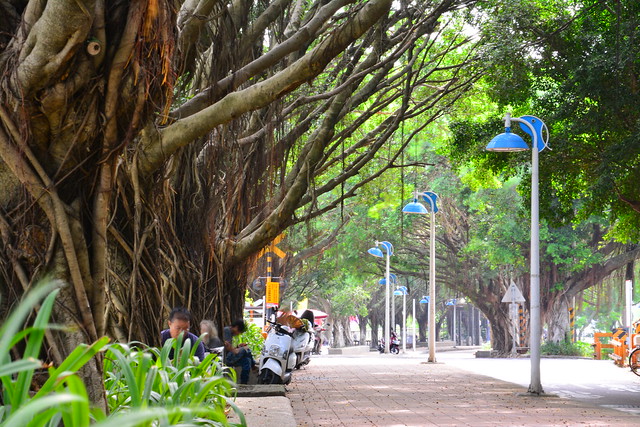
DSC_0283

When you approach Hutoushan from the County Stadium, you need to pass through this small street along the river. You will see majestic trees on both sides of the road, they are called Chinese Banyan. The scientific name is Ficus microcarpa. It was first described scientifically by Carl Linnaeus the Younger in 1782. In Europe they are growing mostly indoor in flower pots, very often as bonsai trees. But in Taiwan Ficus microcarpa is a huge tree. Distinctive to it are the aerial roots hanging down rom high. With the aerial roots the tree take water from the humid air. If the roots are let to grow and they reach the ground, they will become pillar roots and finally develop into secondary trunks. In this way a banyan style tree with pillar roots and secondary trunks is developed.

Sunday, 31 August 2014

Taoyuan City - Tiger head mountain (Hutoushan, 桃園虎頭山)

Taoyuan City is located in the North-West of Taiwan. It is the gateway to Taiwan, since the most important international airport is located there. It is an industrial city, where my mobile phone was made (or designed).

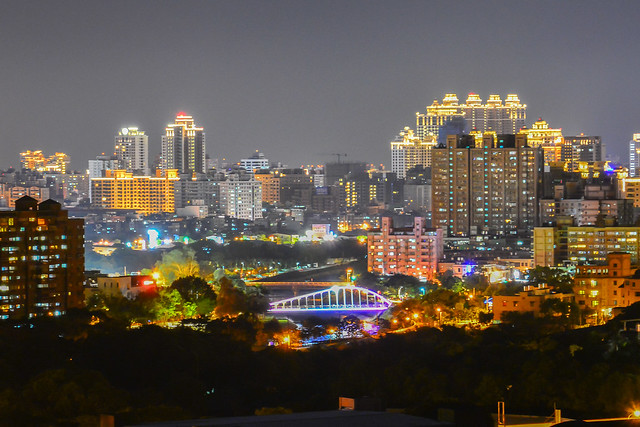
Taoyuan City by night.
CSC_4029


Wednesday, 20 August 2014

Trip to Finland - birds of South-Western Finland

It is much easier to take photos of plants than birds. Therefore this article is short.

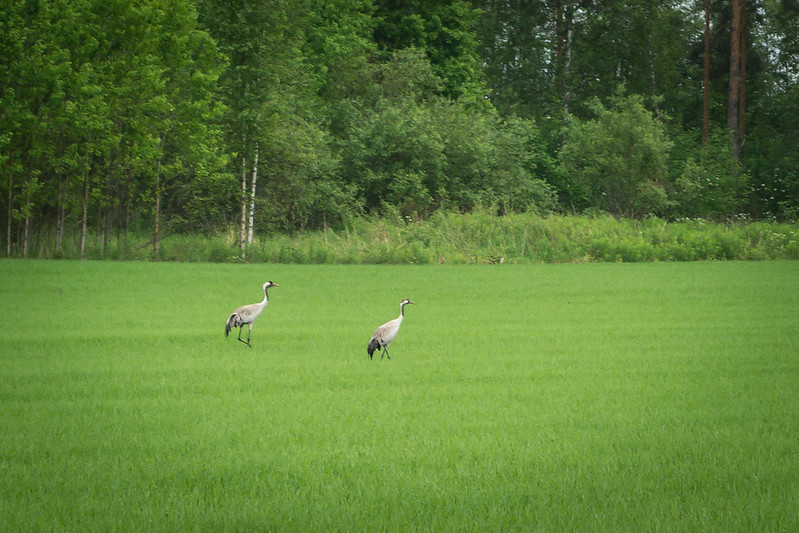
The common crane (Grus grus), also known as the Eurasian crane, Kranich in German, kurki in Finnish, is a bird of the family Gruidae, the cranes. The Common Crane is a large, stately bird. It is 100–130 cm tall with a 180–240 cm wingspan. Crane is slate-grey overall. The forehead and lores are blackish with a bare red crown and a white streak extending from behind the eyes to the upper back. The species is a long distance migrant predominantly wintering in northern Africa.

You cannot avoid seeing cranes when driving through South Western Finland in June. These are having lunch at Purmojärvi. Cranes eat everyting, plants, roots, leaves, seeds, potatoes, fruit, fish, snails, crabs, rodents, small birds, Cranberry got its name from cranes.
DSC_1195

Trip to Finland - Plants of South Western Finland - Evijärvi

In this article I will present some of the plants that, in the eyes of an expatriate, are characteristic to South-Western Finland. Some of these plants are ignored because they are too ordinary, but in my eyes they are friends from time past. Combined with smell they bring up memories from childhood. Most of the photos are from Evijärvi.

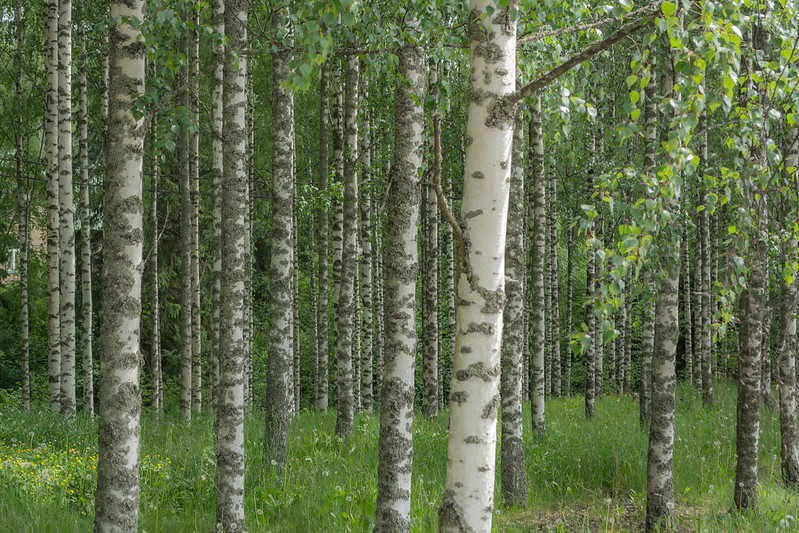
First and the most beautiful is the birch tree, Betula, koivu in Finnish. There are many different subspecies. The one in the photos is Betula pendula, rauduskoivu, silver birch.
DSC_0863

Sunday, 13 July 2014

Trip to Finland PART 2 - South-Western Finland: Evijärvi

Evijärvi is a small town located in the lake district of Southern Ostrobothnia region of Finland. Yes, lake district! Most Finns don't know that there is a lake district in Southern Ostrobothnia, that is supposedly all flat. Evijärvi has 2 600 inhabitants. Language is Savonian dialect of Finnish, which is quite special, since Savonia is in the East of Finland, Evijärvi is in the West. There is a particular reason for Eastern dialect in this region.

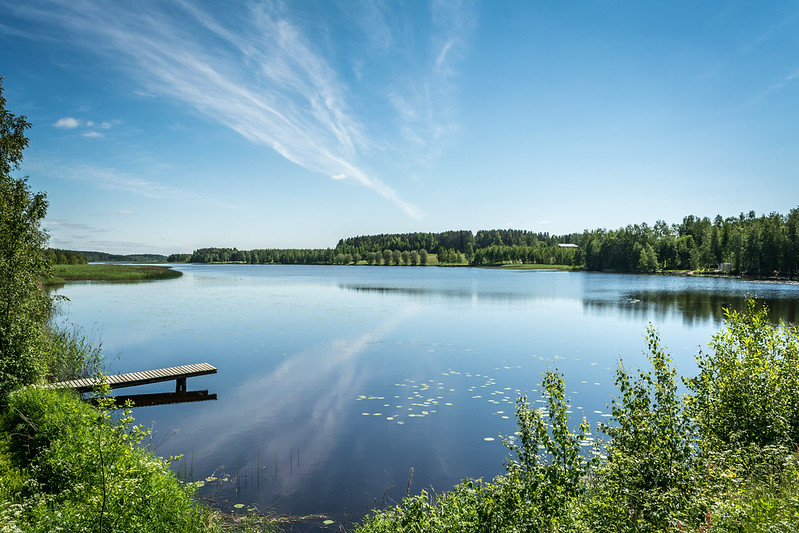
This bay of lake Evijärvi is located in the village of Ina It is the North Eastern corner of the lake. The plant in the water is Nymphaea fennica, or pikkulumme in Finnish.
DSC_1348-2

Trip to Finland PART 1 - South-Western Finland: Hämeenkyrö - Ikaalinen

Finland is still pretty unknown entity for most of the Europeans. I hope this writing and photos give some more insight. In this part of the travel diary I visit Pirkanmaa, the region around Tampere. The towns visited are Hämeenkyrö and Ikaalinen.

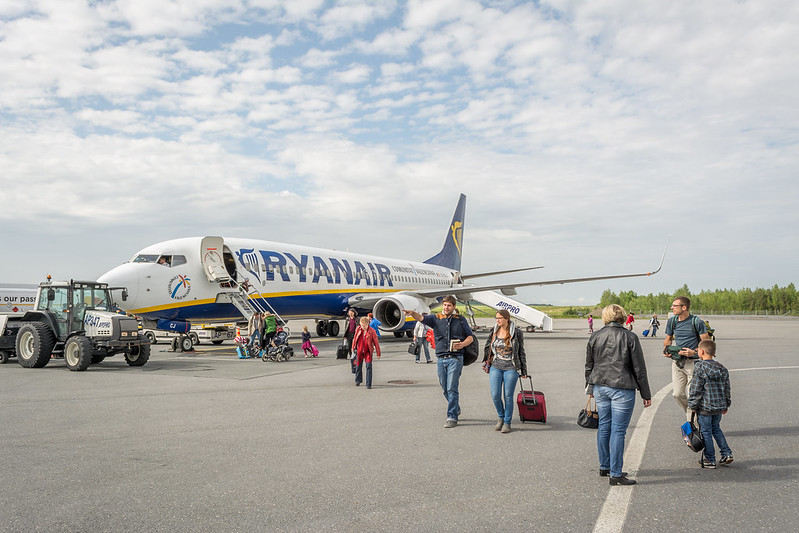
From Western Europe (whatever it may mean) there are basically three ways how you can reach Finland. The easiest way is to fly. The cheapest airliner is Ryanair. Other methods are by car through Germany, Denmark and Sweden and then the remaining 10 hours on a ferry, or, the third method, take a ferry straight from Germany, either from Rostock or Travemünde, some 30 hours.

I took Ryanair from Frankfurt Hahn to Tampere.
DSC_0746

Wednesday, 9 July 2014

Exploits of Don Esaias - Attack on the sea

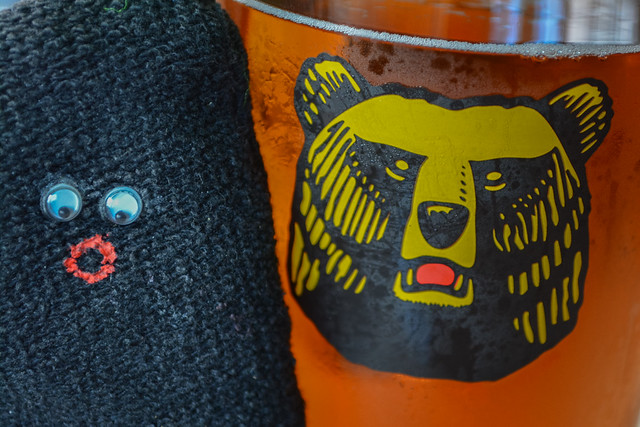
Don Esaias doesn't stop surprising me. He always go through adventures. Despite of the dangers, he manage to come out of them as conqueror and hero. One time he met an angry bear and had to wrestle it down with his bare hands. Here's the photo:
Don Esaias and the bear